Do Vibration Plates Work? Benefits, Research and How to Use One
Wondering whether vibration plates are worth trying? Here's what the research says and our honest advice.

August 5, 2026 - Updated August 5, 2026
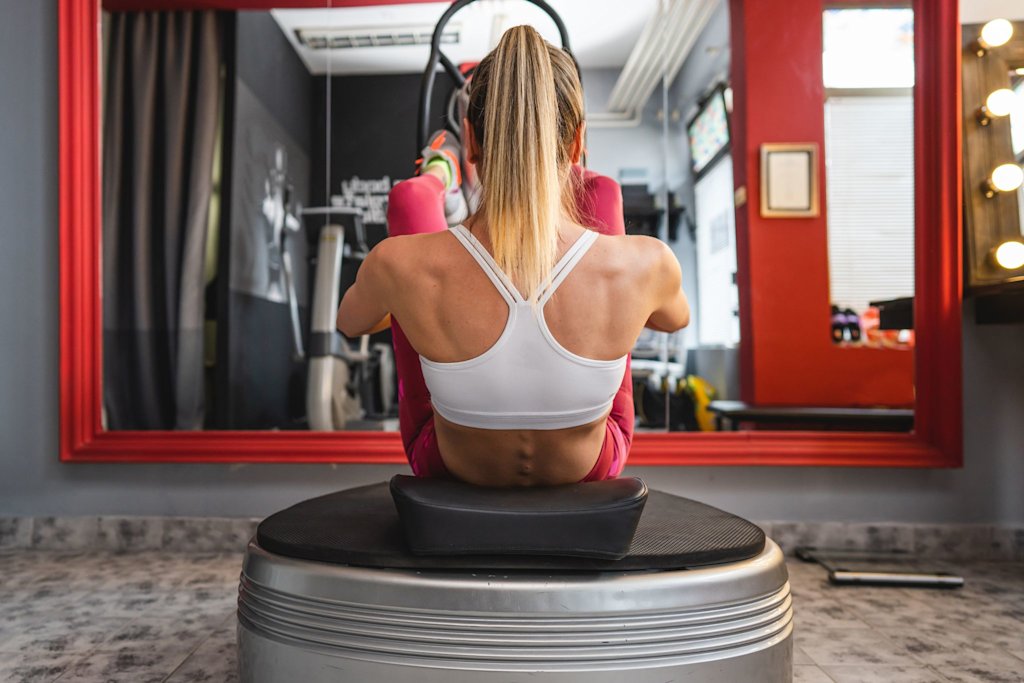
Along with crazy supplement stacks, 10-step routines, at-home red light LED treatments, and everything else, we keep seeing vibration plates all over our feeds. They felt like something you used to see in midday TV commercials, and now... they're back?
Some people swear by them for everything from weight loss to lymphatic drainage, while others are (and rightly so) questioning whether standing on a vibrating platform can really make that much of a difference.
While they definitely aren't some magical hack to replace strength training or cardio, research suggests whole-body vibration may support muscle activation, balance, circulation and, for some people, bone health. The key is knowing what they can realistically do and where they fit into your routine. Here's what the evidence says.
What is a vibration plate?
If you haven't seen them before, a vibration plate is a platform that vibrates rapidly while you stand, sit or perform exercises on it. Most machines vibrate between 20 and 50 times per second, causing your muscles to contract and relax reflexively.
These tiny, repeated muscle contractions make your muscles work harder than they would while standing on stable ground.
You can't expect to simply stand on the plate and see results, you actually need to exercise on it. As you can imagine, doing squats on a vibrating plate is going to be more challenging on your muscles (as they're working even harder to keep you stabilised) than doing squats on flat ground.
Do vibration plates actually work?
The first thing is to clarify what you're really asking. Work for what?
Research suggests vibration plates (also called whole-body vibration, or WBV, machines) can help with muscle activation, balance, circulation, and, in some people, bone health. A 2025 meta-analysis reviewing 21 randomised controlled trials in healthy women found whole-body vibration training led to real improvements in lower-body muscle strength and power. But research often compares vibration plate use to control groups who aren't doing any exercise at all, and Mayo Clinic is clear that it's not a replacement for strength training, cardio or a balanced nutrition plan.
Think of a vibration plate as something that can complement your workouts, not replace them. If you really want to build strength and muscle, a progressive strength training program is the way to go.
What are the benefits of vibration plates?
They increase muscle activation
This is where the evidence is strongest. Because your muscles are constantly responding to the vibrations, exercises like squats, lunges, calf raises and planks become slightly more challenging. That doesn't necessarily mean you'll build muscle super quickly (nor that you should go for a vibration plate over progressive weight training), but it can increase muscle activation during the movement. Weight training always wins for muscle growth.
They may support bone health
This is one of the most promising areas of research, particularly for women.
A meta-analysis published in the Journal of Osteoporosis found that whole-body vibration may help slow the decline in bone mineral density, particularly in postmenopausal women, who are at greater risk of osteoporosis. Other research on college-age women found improvements in spinal bone density too.
Again, that doesn't mean vibration plates replace lifting weights. Strength training remains one of the best ways to support healthy bones, but vibration may offer an additional benefit for some people.
They can improve balance and stability
A randomised controlled trial in women aged 60 and over found that whole-body vibration training improved gait, balance and functional strength, and reduced fall risk.
Because the vibrations constantly challenge your body to stabilise itself, regular use may help improve your balance over time. That's one reason vibration plates are sometimes included in rehabilitation and fall-prevention programs, alongside dedicated balance exercises.
They may temporarily increase circulation
The repeated muscle contractions can encourage blood flow while you're using the machine.
You'll sometimes see vibration plates marketed as "detox" tools, but that's misleading. Your liver and kidneys already do an excellent job of removing waste products from your body. You're not going to vibrate out the toxins in your body.
Instead, think of improved circulation as a potential short-term benefit, similar to what happens when you get up and move after sitting for a long time, or the boost you get from other muscle recovery habits.
They can make low-impact exercise feel more challenging
If you're recovering from injury, easing back into exercise or simply looking for another training tool, vibration plates can increase the challenge of simple bodyweight exercises without adding external weight.
They're often used with:
Bodyweight squats
Lunges
Calf raises
Glute bridges
Planks
Gentle mobility exercises

Can vibration plates help you lose weight?
Not on their own. Using a vibration plate burns some calories, especially if you're moving rather than standing still, but orthopedic experts note the effect is relatively small compared with walking, running or strength training.
They're also not capable of reducing belly fat specifically. Spot reduction isn't how fat loss works.
If your goal is weight loss, focus on:
Regular strength training
Cardio you enjoy
Eating enough protein
Maintaining a sustainable calorie deficit
A vibration plate can be part of that routine if you enjoy it, but it's not necessary, and it definitely shouldn't be the foundation.
Who should avoid using a vibration plate?
Mayo Clinic notes that most healthy adults can use vibration plates safely, but it's worth speaking with your healthcare provider first if you:
are pregnant
have a pacemaker or implanted medical device
have recently had surgery or a fracture
have severe osteoporosis
have uncontrolled cardiovascular conditions
have another condition your doctor has advised may be affected by vibration
If you're unsure, it's always best to check before starting.
Simple vibration plate exercises
Rather than simply standing on the plate, try moving through a few basic exercises.
Bodyweight squats
Static lunges
Calf raises
Plank with your hands or forearms on the plate
Standing hamstring stretch
Standing calf stretch
Aim for 30 to 60 seconds per exercise, completing 2 to 3 rounds.
So, are vibration plates worth it?
If you're expecting a vibration plate to replace your workouts, you'll probably be disappointed. Weight training will always win.
But if you see it as another training tool or a way to spice things up, go for it.
Research suggests vibration plates can support muscle activation, balance, circulation and bone health, particularly when they're combined with regular exercise. If you are going to use one, they're most effective as an addition to a well-rounded routine that already includes strength training, cardio and recovery.
We will always recommend prioritising a consistent strength program over buying another piece of equipment.
Erin is a writer and editor at Sweat with years of experience in women's publishing, the fitness industry, media and tech. She's passionate about the power of movement, and you can often find her on a yoga mat, a hike, a dance floor, in the ocean or the gym.
* Disclaimer: This blog post is not intended to replace the advice of a medical professional. The above information should not be used to diagnose, treat, or prevent any disease or medical condition. Please consult your doctor before making any changes to your diet, sleep methods, daily activity, or fitness routine. Sweat assumes no responsibility for any personal injury or damage sustained by any recommendations, opinions, or advice given in this article.
Fitness