Train Smarter, Not Harder: Why Compound Exercises Are Gamechanging
Compound exercises work multiple muscles at once, helping you build strength, save time, and get more from every workout.

March 6, 2020 - Updated January 27, 2026
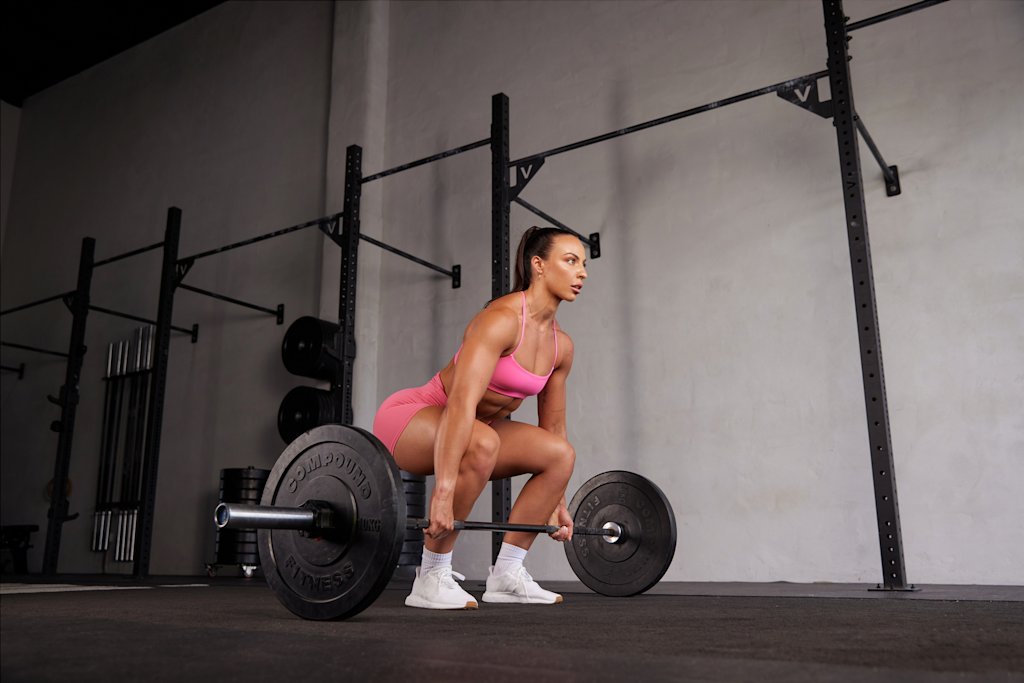
Are you looking for the most effective way to build strength and muscle? While there’s no shortcut to results (consistency still wins), there is a smarter way to train. If you want to get more from every workout and make better use of your time, it starts with one thing: compound exercises.
What are compound exercises?
Compound exercises work multiple muscle groups and joints at the same time, while isolation exercises focus on a single muscle group and usually involve just one joint.
For example, squats and deadlifts are two of the most effective compound exercises. Squats engage your quads, glutes, hamstrings, calves, hips, lower back and core. Deadlifts also recruit several major muscles, including your hamstrings, glutes, quads, upper and lower back, hips and core.
In contrast, isolation exercises target one muscle at a time, such as a bicep curl, which primarily works the biceps using a single joint.
Benefits of compound exercises
There are several reasons why we love compound exercises, and they feature in almost every Sweat program.
Efficiency: Because compound exercises work multiple muscles at once, you can train more of your body in less time, without needing separate exercises for each muscle group. This makes it easier to complete a challenging, effective full-body workout, even when you're short on time.
Functional training: Compound movements mimic real-life activity. Exercises like squats, presses and deadlifts train your body to move as a connected system, rather than isolated parts. This improves overall movement quality, balance and control, which can carry over into everyday tasks and reduce the likelihood of injury.
Strength gains: Because compound exercises tend to use larger muscles, they allow you to lift heavier and progress faster than some isolation exercises. Techniques like progressive overload and rate of perceived exertion (RPE) are useful ways to track progress and ensure your body is staying challenged.
To support your training, remember to fuel your body with nutritious foods, consume enough protein to aid muscle recovery, and prioritise rest days so your body has time to adapt and grow stronger.
The best compound exercises
You can build full-body strength at home or in the gym with compound exercises, and these five are some of our favourite movements that cover all the major movement patterns: squat, hinge, push, pull and press.
Squat
The ultimate lower-body builder. Squats target your quads, glutes, hamstrings and calves, while also engaging your core and lower back for stability. Squats are also a movement you perform in real life every time you sit down and stand up or bend down to lift something up.
Squats can be performed as a bodyweight exercise, or with free weights like dumbbells, a kettlebell, or a barbell.
Deadlift
One of the most powerful full-body movements. Deadlifts work your glutes, hamstrings, quads, core, and upper and lower back - and train one of the most important real-life patterns: lifting weight safely from the ground. Focus on pushing through the floor with your feet and keeping your chest proud to avoid rounding through your back.
Push-ups or bench press
Think of push-ups or bench press as your main upper-body pushing movement. They target your chest, shoulders and triceps, while also engaging your core for control and alignment. Form is always most important, so build your strength and confidence with modified push-ups on your knees before advancing to push-ups on your toes. Bench press can be performed with dumbbells or a barbell.
Pull-ups or rows
Pull-ups are an incredible compound exercise that strengthen your back, biceps and shoulders, helping improve your posture, upper-body strength and core strength. They're also hard, so feel free to use a resistance band to reduce the difficulty as you build your strength.
If you don't have access to a bar for pull-ups, rows work similar muscles, and can be performed with dumbbells, a barbell or suspension trainers.
Overhead press
The overhead press targets your shoulders, triceps and upper chest, while your core and lower body work with every rep to stabilise the movement. Depending on your strength levels and what equipment you have access to, you can perform these with dumbbells or a barbell.
Your strongest foundation
Compound exercises feature across Sweat programs because they form the foundation of effective strength training. You can build a well-rounded fitness routine using compound movements alone, while isolation exercises are great add-ons to supplement your training, support specific goals or aid recovery and rehabilitation.
As with any new training approach, start with weights and variations that suit your current ability, then progress gradually as your strength, confidence and technique improve.
A more empowered you starts with Sweat, and our editorial team is here to bring you the latest fitness tips, trainer recommendations, wellbeing news, nutritional advice, nourishing recipes and free workouts.
* Disclaimer: This blog post is not intended to replace the advice of a medical professional. The above information should not be used to diagnose, treat, or prevent any disease or medical condition. Please consult your doctor before making any changes to your diet, sleep methods, daily activity, or fitness routine. Sweat assumes no responsibility for any personal injury or damage sustained by any recommendations, opinions, or advice given in this article.
Fitness